For Great Falls, roofing needs to endure harsh UV rays, wind stress, snow loads, and freeze-thaw cycles. Metal roofing systems delivers superior performance versus standard asphalt through resisting impact, fire, uplift, and faster weathering, and sheds snow much faster. Check for shingle cracks, flashing gaps, leaks, granule deterioration, and roof sags in the aftermath of storms. An experienced skilled roofing contractor will review decking, underlayment, and ventilation, analyze damage from storms, and suggest repair or full replacement considering lasting performance.
Key Takeaways
- Great Falls roofs must handle extreme sun exposure, strong wind, substantial snowfall, and freeze-thaw cycles that worsen leaks and material breakdown.
- Metal roofs perform for 40–70 years, withstand wind, fire, and impact superior to asphalt shingles, and remove snow readily.
- Standard shingles need fewer upfront capital yet deteriorate quickly often, suffering from curling, crack development, and granule loss during Great Falls climate.
- Red flags are broken shingles, separated flashing, deteriorating valleys, ceiling stains, attic condensation, plus damage from storms across various roof slopes.
- Great Falls roofing contractors supply roof inspections, leak diagnostics, storm repairs, emergency tarping, plus skilled metal roof installation including suitable underlayment and flashing.
The Way Great Falls Weather Affects Roofing Systems
Your roof in Great Falls encounters powerful UV rays, strong wind, hailstorms, heavy snow, and fast temperature fluctuations creating year-round stress that cuts functional years. Sun exposure dehydrates roofing materials, damages seals, and accelerates surface degradation. Wind lifts perimeter areas, forces precipitation within weak seams, and loosens roof flashing around openings.
Weight from snow contribute pressure, while ice formations contain moisture at eaves and heighten leaking potential. Freeze and thaw cycles widen tiny cracks, open seams, and deteriorate the underlayment. Hailstones can bruise protective surfaces, damage coating layers, and expose substrates to moisture intrusion. You also deal with microclimate effects: southern exposures warm sooner, shaded areas stay wet longer periods, and areas facing wind weather faster. Frequent inspections assist homeowners identify storm damage promptly, maintain drainage systems and prolong longevity through extreme temperature swings.
Metal Roofing as an alternative to Shingles in Great Falls
When you compare metal panels to traditional shingles in Great Falls, the choice usually comes down to weather resistance, durability, upkeep, and long-term cost. Metal panels withstand impact, fire, and wind better than asphalt materials, and they typically last 40 to 70 years instead of 15 to 30.
Most often, you'll outlay more in advance for metal systems, yet you may change it infrequently and conduct fewer maintenance activities. Asphalt shingles cost less upfront and supply basic spot work, though they may become curled, crack, or lose granules more rapidly. Metal systems also enables better snow discharge, which minimizes snow pileup when appropriately installed with safety guards. When you're looking at adding solar, metal roofing delivers simpler mounting choices and fewer holes in the roof. The best selection is determined by your budget constraints, ownership duration, and maintenance tolerance.
Why Metal Roofing Performs in Montana
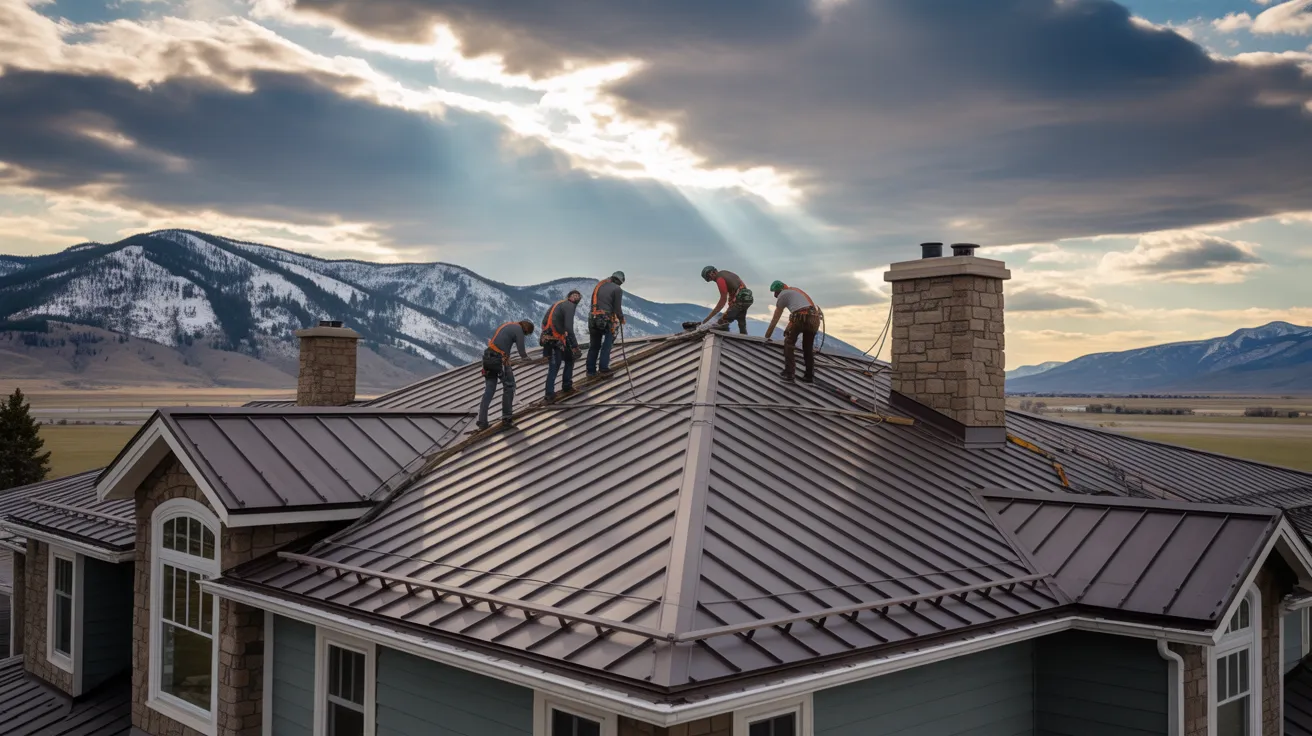
Built for temperature swings, high winds, substantial snowfall, and intense UV exposure, metal roofing works effectively in Montana's harsh weather. Your home receives a system that withstands temperature changes, drains water fast, and preserves strength through freeze-thaw cycles. Interlocking panels, concealed fasteners, and modern coatings reduce wind uplift, rust, and UV deterioration.
Additionally, you gain from effective snow release, which reduces snow weight on the roof and safeguards roof structure. Because metal reflects solar radiation, it can moderate heat buildup in the attic in warm, arid seasons. The material's minimal moisture absorption supports performance during ice and snow events. Metal longevity is important in Montana, where constant weather exposure may reduce the lifespan of weaker materials. With correct underlayment, adequate ventilation, and expert installation, the roof remains strong, energy-saving, and functional for many years with minimal maintenance overall.
Indications You Should Get Roof Repairs
Recognizing roof troubles promptly safeguards you from structural harm, interior moisture problems, and high replacement bills. Inspect cracked or split shingles, lifted or peeling flashing, visible bolts, corroded valleys, and caulk breakdown at vents, skylights, and chimneys. In the interior, search for discoloration on ceilings, saturated insulation, mold problems, or gaps in the roof deck.
Post-storm, look for impact damage, repositioned pieces, and missing granule material in gutters. Monitoring granule deterioration enables detection of compromised shingle surfaces before water seeps through the base layer. Insufficient roof ventilation also results in telltale signs: intense heat, frost buildup, excess dampness, and early shingle curling. In case electricity bills jump out of nowhere, high humidity and warmth might be jeopardizing roof performance
Arrange maintenance if you see drooping areas, persistent leaks, or unsecured fasteners. Fast intervention preserves the roof deck, insulation materials, and inside surfaces.
When Roof Replacement Makes More Sense
Consider replacing your roof when severe weather impacts extensive areas, compromises key structural elements, or exceeds practical repair limits. If you're regularly spending on recurring leaks, patch failures, or frequent maintenance visits, a new roof often provides better long-term value. An aging roof system at or past its design life is unable to effectively protect your property, even though individual repairs may still seem viable.
Significant Storm Destruction
When a severe storm damages large sections of your roof, a complete replacement typically provides more financial and structural sense than repeated repairs. After hail aftermath, wind damage, or punctures from fallen branches, you may have compromised decking, saturated underlayment, and extensive shingle damage that repairs can't reliably isolate.
You need a comprehensive evaluation, not temporary fixes. Storm forces frequently damages seals, weakens fastening systems, and forms hidden linked resource moisture paths around valleys, vents, and flashing. Even after debris removal, standing water can continue degrading sheathing and insulation below the surface. If damage impacts several slopes or exposes the roof assembly, new installation restores consistent protection, regulatory compliance, and warranty-backed performance. It also allows you upgrade ventilation, underlayment, and impact-resistant materials so your next Great Falls storm won't exploit the same vulnerabilities again.
Recurring Maintenance Expenses
Often, recurring leak repairs, shingle repairs, and flashing fixes accumulate higher costs versus a scheduled roof replacement. If you're requesting service every season, you're probably caught in spending cycles that deplete your finances without correcting underlying deck, ventilation, or underlayment issues. Small patch jobs can restore temporary function, but they rarely provide comprehensive performance.
You need to compare yearly repair costs against replacement costs, labor escalation, and material matching problems. Repeated fixes also generate warranty gaps, particularly when several contractors manage separate sections or different product lines. These gaps can leave you covering costs yourself if new problems emerge near previous repairs. A full replacement gives you one integrated assembly, consistent installation quality, and streamlined maintenance schedules. In many cases, that reset lowers overall roofing expenses and minimizes operational disruption markedly.
Aging Roof Systems
As roofing systems grow older, material degradation occurs alongside fastener displacement, sealant deterioration, and drainage system failure, raising leak risks and weakening environmental defense. Visible indicators encompass brittle shingles, membrane splitting, rust at penetrations, and repetitive post-storm leaks. Symptom patching fails to address systemic decline.
Roof replacement provides advantage when evaluations show water within roof assembly, heavy granule deterioration, compromised insulation, or poor ventilation conditions that heightens thermal stress. Additional factors include regulatory code improvements, attachment robustness, and flashing suitability with state-of-the-art materials. Comprehensive system replacement permits resolution of inaccessible defects, boost water movement, and deploy rated assemblies meeting modern specifications. Substantial initial investment reduces crisis service events, prevents structural moisture damage, and cuts complete lifecycle costs.
Great Falls Roofers' Storm Damage Response
Harsh weather conditions could damage roofing structures within short durations, Great Falls roofing teams start restoration efforts through rapid organized review of roof coverings, fastening systems, protective barriers, deck structure, and metal materials to uncover visible failures and hidden water paths.
After initial storm evaluation, you receive detailed documentation of deterioration, water penetration, and structural hazard. Roofing contractors remove debris first so fallen limbs, ice chunks, and loose objects don't keep abrading surfaces or obstructing water flow. They tarp exposed sections, seal punctures, replace lifted shingles, refasten flashing, and verify fastener condition on metal areas. If water reached the decking, they will assess for water saturation, layer separation, and mold risk areas prior to authorizing restoration. You also get photos and measurements that substantiate insurance documentation and assist in ranking critical fixes over cosmetic fixes.
Installing a Metal Roof System
From tear-off to final trim, metal roofing installation adheres to a set order that safeguards your residence and roofing system efficiency. First, you remove old roofing, decking is evaluated, and replace any soft or damaged sections. Subsequently, slope is confirmed, dimensions are verified, ventilation routes are assessed, and attachment zones are checked so panels align correctly.
Following this, boundary metal parts, ice and water barriers, and backing material options are selected according to local climate, pitch angle, and construction regulations. Panels start from a level alignment, with fasteners meeting manufacturer standards. In seam-lock systems, seam edges locked closed and remain aligned managing water management and heat movement. To complete installation, flashing is added, capping and trim pieces get installed, transitions are protected, and final review with checklist ensures weather resistance and visual finish.
What Great Falls Roofing Experts Offer
If you require either a basic repair or a new roof installation, Great Falls roof professionals generally perform inspections, leak detection, weather damage repairs, roof recovery, new roof setup, and preventive maintenance for commercial and residential structures.
Along with core services, you're able to hire them for flashing repair, ventilation improvements, gutter installation, skylight repairs, and ice dam removal. If hail or wind damage decking, they will conduct temporary tarping to minimize water penetration before permanent repairs commence. With mature systems, they examine underlayment condition, fastening systems, roof penetrations, and drainage systems, then suggest targeted repairs or total replacement when appropriate. Numerous teams handle asphalt shingles, metal roofing, membrane roofing, and protective coatings. They may document harm for insurance purposes and schedule seasonal inspections to identify sealant issues, corrosive damage, panel separation, and blocked valleys prior to those issues diminish your roof durability.
How to Select the Right Great Falls Roof Contractor
Prior to hiring a Great Falls roofing professional, verify they maintain proper credentials and hold active liability and workers' compensation insurance. Subsequently, assess their roofing products they suggest so you to align performance standards, service life, and cost to project scope. Additionally to consider their regional experience, since contractors understanding Great Falls weather conditions and regulatory requirements often deliver more dependable results.
Verify Licensing And Insurance
Before executing any roofing contract in Great Falls, ensure that roofing contractor holds the mandated Montana roofing license and carries workers' compensation insurance and general liability coverage. Never rely on verbal assurances. Request the license identification, business title, and insurance information, then complete licensed verification by using state databases and local records. Match the company title on each file.
For verification of insurance, inquire that current certificates be sent from the insurer or broker. Review policy identification, coverage dates, policy limits, and exclusions. Verify that workers' compensation includes each employee working
Review roofing options
Since Great Falls roofs endure hail, high winds, snow load, and sharp temperature swings, you should evaluate materials based on performance, service life, maintenance demands, and total installed cost—not simply the quote cost.
Asphalt shingles usually offer the most affordable installation price, but impact ratings, wind warranties, and granule loss matter. Metal costs more initially, yet it sheds snow, resists fire, and can deliver improved thermal performance through reflective coatings. Synthetic slate and composite shingles lower weight loads while enhancing impact durability, though product quality varies. Ask for product specifications on Class 4 impact resistance, wind uplift, ice dam prevention, and anticipated longevity. You should also compare underlayment, ventilation requirements, fastening specifications, and repair accessibility. A less expensive roof can cost more later if it fails early or requires ongoing storm damage repairs and replacement work.
Assess regional expertise
Material preference counts, though the roofer's local reputation often determines capability that roof performs in Great Falls. You need to verify the duration a roofer served in the area and whether they managed hail damage, heavy snow, chinook winds, and freeze-thaw damage on similar homes. Local history shows whether groups possess ventilation methods, ice dam remediation, flashing standards, and Cascade County requirements.
Ask for locations of recent projects, then review workmanship from the ground. Check client reviews for patterns: timeliness, site cleanliness, warranty support, and quote precision. You should also confirm vendor connections and permit familiarity, because established local roofers typically procure supplies more quickly and handle permits without unnecessary delays. A contractor with proven Great Falls expertise minimizes installation dangers and improves long-term roof performance for your home.
Common Customer Questions
Do local contractors Offer Financing Options for replacement roofing?
Yes, many Great Falls contractors extend financing option availability for new roofs. You can often choose financing plans through the contractor or via a third-party lender. Expect terms influenced by installation price, term length, and your financial profile. Majority of providers require credit checks prior to approval, and several present promotional rates for eligible borrowers. You ought to assess APR, fees, down payment requirements, and prepayment terms before committing to any roofing financing agreement.
Are roofing estimates in Great Falls typically complimentary?
Yes, roofing estimates in Great Falls are usually at no cost, especially when contractors include free inspections for repairs or replacements. You should expect a detailed estimate that details materials, labor, timeline, and cost breakdowns. Some companies may bill for detailed reports, specialty diagnostics, or insurance documentation. Before you schedule, find out what the estimate covers, whether inspections are complimentary, and if extra costs apply to complex roof conditions or access.
How long do roofing warranties usually last in Great Falls?
Like a seatbelt for your roof, warranties in Great Falls usually last 20–50 years for Manufacturer warranties, depending on material and product tier. You'll often get Labor warranties for 2–10 years, though some contractors provide longer coverage. You should ensure what's prorated, transferable, and excluded, especially for wind, ventilation, and installation errors. Review the fine print so you understand exactly what protection you're actually investing in before signing.
Can roof work be scheduled during winter in Great Falls?
Yes, you can arrange roof work during winter in Great Falls, but you'll require weather-dependent planning. You can complete Winter repairs without risk when teams track temperature, wind, ice, and supply handling limits. You should expect delays during storms or extreme cold. Snow clearing often comes first so technicians can access decking, identify leaks, and secure flashing. You'll achieve better results when you schedule early and stay flexible with scheduling windows.
Can Great Falls roofing companies help with insurance paperwork?
Yes, many roofing firms in Great Falls assist you with insurance forms after damage from storms or impacts. You'll often access insurance help through documented inspections, photo evidence, scope summaries, and estimate comparisons. They may also aid claim coordination by meeting adjusters, clarifying repair quantities, and aligning line items to policy coverage. You should still inspect your claim carefully, because your insurer confirms payment terms, depreciation, deductibles, and final settlement amounts.
Closing Remarks
In Great Falls, your roof has to endure wind, snow, hail, and fast temperature changes without breaking. That's why finding the roofing contractor matters. Metal roof systems stands out because it can last 40–70 years—often twice or thrice longer than asphalt-based shingles. When you respond early on repair or replacements, you defend your residence, lower extended costs, and improve performance. Collaborate with Great Falls roofing experts who comprehend local weather patterns and place systems built to last.